Molecular Products
Taq DNA Polymerase 1000 units
- Catalog no.
- GSB101-0500
- Subcategory
- Taq DNA Polymerase
Ask about pricing, availability, configuration or technical fit. No account required.
Description
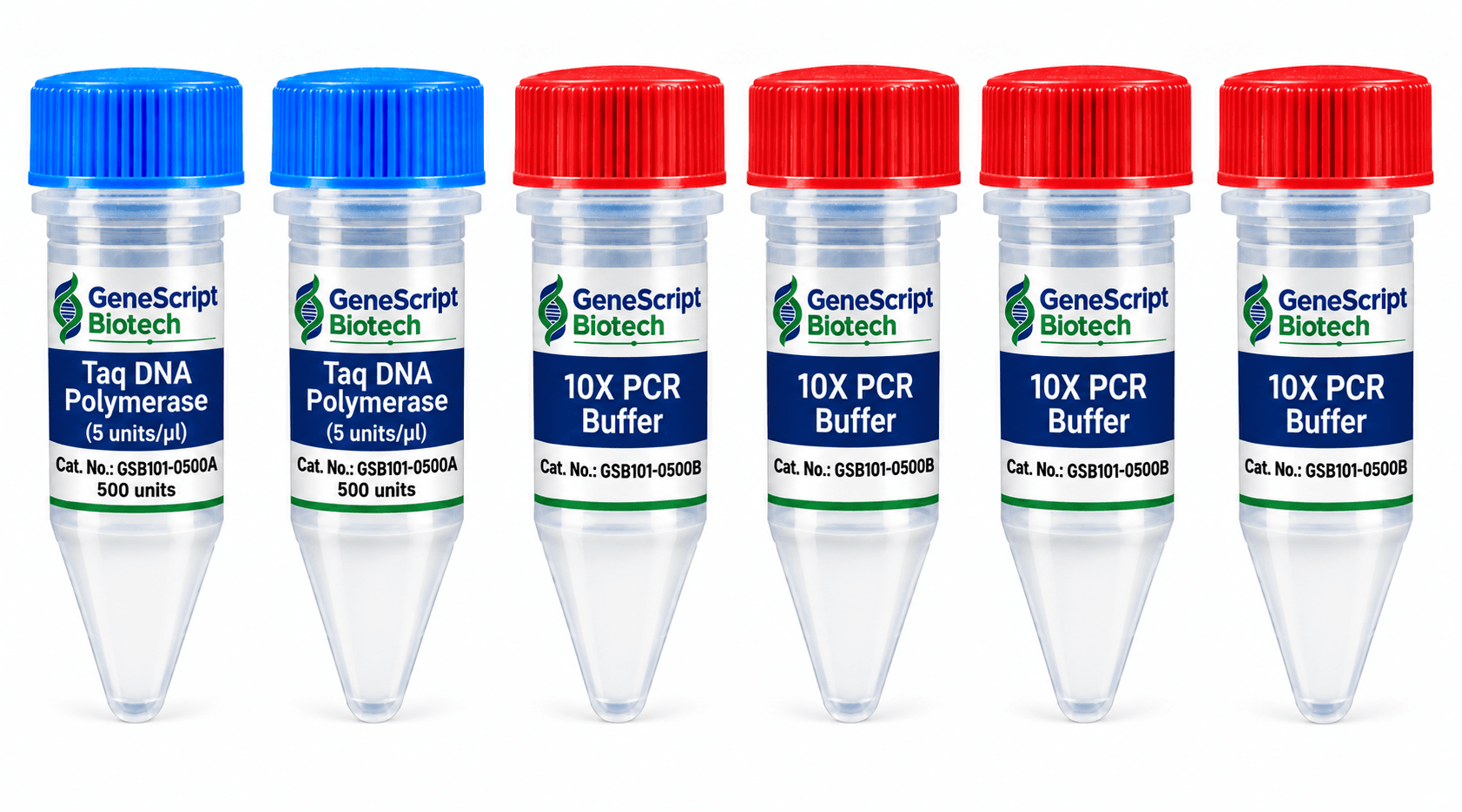
Taq DNA Polymerase is a simple, specificity PCR reaction mixture. Simply add primers, template, dNTPs, and PCR grade water, the reagent will execute primer extensions and other molecular biology applications. Taq DNA Polymerase contains two components, include the Taq DNA polymerase and 10X PCR buffer. The Taq DNA Polymerase is purified from E coli., expressing a Thermus aquaticus DNA polymerase gene. This enzyme has a 5' →3' DNA polymerase and a 5' → 3' exonuclease activity but lacks a 3' → 5' exonuclease activity. The enzyme consists of a single polypeptide with a molecular weight of approximately 94 kilo Dalton. Taq DNA polymerase is heat-stable and will synthesize DNA at elevated temperatures from single-stranded templates in the presence of a primer. The Taq DNA Polymerase is recommended for use in routine PCR reactions. The 10X PCR buffer is optimized for high specificity and guarantees minimal by product formation. Usually 1-1.5 unit of Taq DNA polymerase is used in 50 μl of reaction mix. Higher Taq DNA polymerase concentrations may cause synthesis of nonspecific products. However, if inhibitors exist in the reaction mixture (e.g., if the template DNA used is not highly purified), higher amounts of Taq DNA polymerase (2-3 units) may be necessary to obtain a better yield of amplification products.
Features
- Ideal for routine PCR applications.
- Kit includes optimized reagents and enables flexible experiments
Quality Control
The quality of the Taq DNA Polymerase is tested on a lot-to-lot basis to ensure consistent product quality
Required Materials
- 10 mM dNTP mix
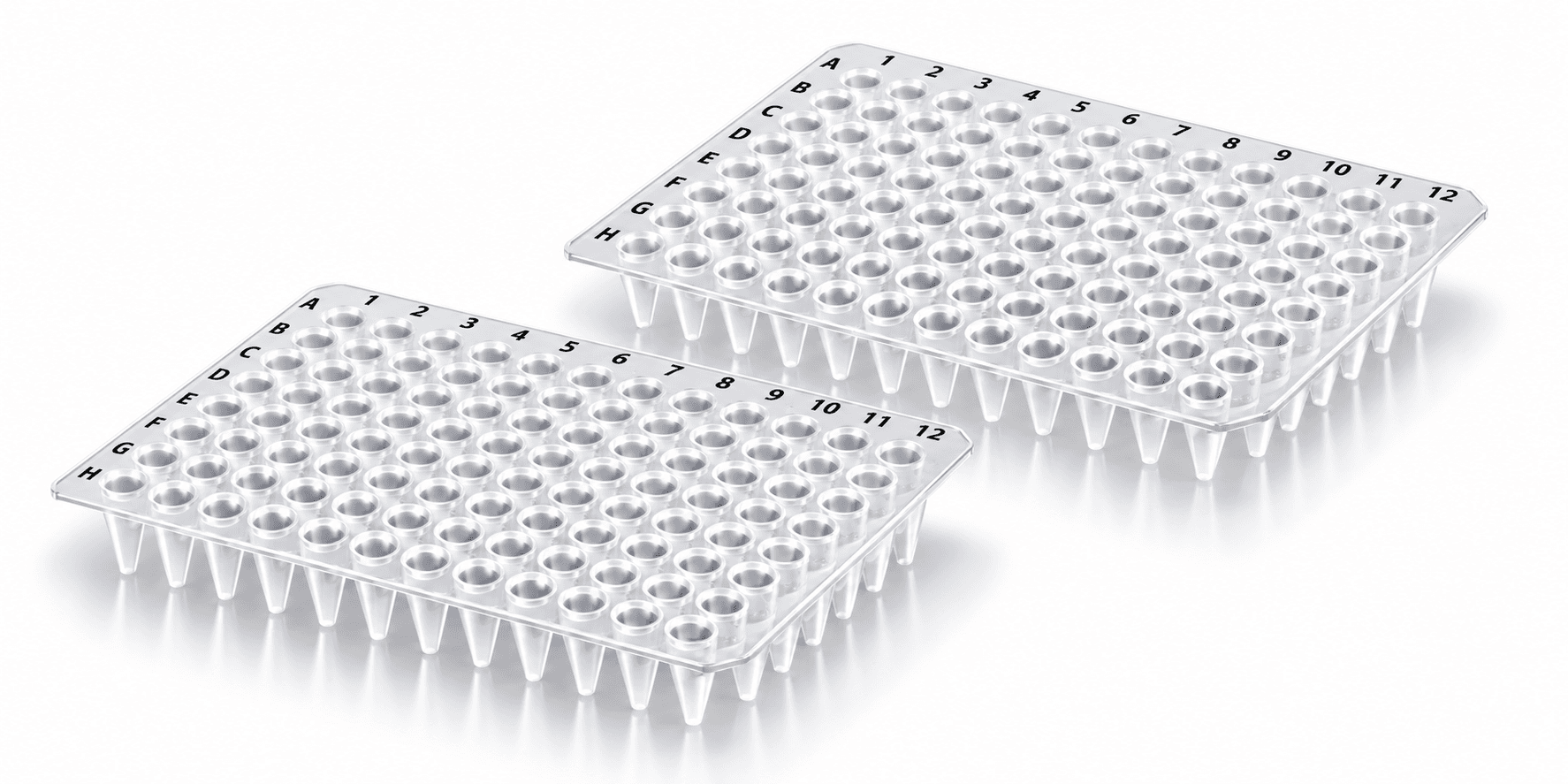
- PCR microcentrifuge tubes
- PCR grade water
- PCR thermal cycler
Storage Buffer
The enzyme is supplied in a storage buffer consisting of 50 mM Tris-HCl (pH 8.0), 100 mM NaCl, 0.1 mM EDTA, 5 mM DTT, 50% glycerol and 1.0% Triton®X-100
Unit Definition
One unit is defined as the enzyme catalyzes the incorporation of 10 nanomoles of deoxyribonucleotides into a polynucleotide fraction in 30 minutes at 70°C.
Where it fits
Applications
Product data
Technical specifications
| Kit contents | ||
|---|---|---|
| Contents | GSB101-0500 | |
| Taq DNA Polymerase (5 units/μl) | 500 units X 2 vial | |
| 10X PCR buffer | 1.25 ml X 4 vials | |
| Taq DNA Polymerase Protocol: | ||
| 1. For each 50 μl reaction, assemble the following in a 0.2 ml PCR tube on ice just prior to use: | ||
| Components | 50 μl Reaction | Final Concentration |
| 10 mM dNTP Mix | 1 μl | 200 μM |
| Forward primer, 5-10 μM | 1 μl | 0.1-0.2 μM |
| Reverse primer, 5-10 μM | 1 μl | 0.1-0.2 μM |
| 10X PCR Buffer | 5 μl | 2 mM MgCl2 |
| Template DNA | Variable | 10 ng |
| Taq DNA Polymerase (5 units/μl) | 0.25 μl | 1.25 units |
| Add PCR grade water to | 50 μl | -- |
| 2. Mix gently. If necessary, centrifuge briefly. Cap tubes and place in thermal cycler. | ||
| 3. Perform PCR reactions using the following cycling program: | ||
| Program | Temperature | Time |
| Initial Denaturation | 94°C | 2-5 minutes |
| Denaturation | 94°C | 20-40 seconds |
| Annealing | at the proper annealing temperature | 1 minute |
| Extension | 72°C | 2 minute |
| Final extension | 72°C | 5 minute |
| Troubleshooting: | ||
| Problem | Cause | Solution |
| No amplicon | Error in set up | Repeat the experiment, checking all reagents are added in correct volumes. Use master mix to ensure all components added correctly. |
| """ | Primer design error | Check primer parameters on primer design software. Redesign primers. |
| Low yield | Insufficient template | Check the concentration of template, if necessary, increase the template concentration. |
| """" | GC rich or difficult template | Use GDP-HiFi DNA Polymerase (Cat. No. GSB601-0100) with high performance buffer. |
| Non-specific amplification–smeared product | Template degraded | Minimize freeze thawing of DNA. Run template on agarose gel to check integrity |
| Wrong size band amplified | Contamination | Check no template control for bands |
| """ | Wrong primers or template added | Check primers and template vials have been labeled correctly and selected correctly during setup |
| All products are research use only. | ||
Caution
- Check buffers before use for precipitation.
- Aliquot reagents to avoid contamination and repeated freeze-thaw cycles.
- During operation, always wear a lab coat, disposable gloves, and protective equipment.
Note
Optimal conditions for amplification will vary depending on the primers and thermal cycler used. It may be necessary to optimize the system for individual primers, template, and thermal cycler.
- Analyze the amplified DNA using agarose gel electrophoresis.
- Use the PCR reaction products for down-stream applications, or store it at -20°C
Explore more